Welcome

A WORLD OF SCIENTESTS & THEIR INVENTIONS
ENTER

Add An Entry Or A Welcome Page To Blogger by Beautiful Blogger Widgets

A WORLD OF SCIENTISTS AND THEIR INVENTIONS

Welcome

On this blog you'll access to important information related to scientists and their contribution in the field of Biological science as well as other fields of Science. I hope this blog helpful for every person who looking for study or research in Science.
Thanks for visit my blog
Saturday, 29 September 2012

Kary Mullis


Kary Banks Mullis, Nobel Prize winning chemist, was born on December 28, 1944, in Lenoir, North Carolina.
He received a Bachelor of Science degree in chemistry from the Georgia Institute of Technology in 1966. He earned a Ph.D. degree in biochemistry from the University of California, Berkeley, in 1972 and lectured in biochemistry there until 1973. That year, Kary became a postdoctoral fellow in pediatric cardiology at the University of Kansas Medical School, with emphasis in the areas of angiotensin and pulmonary vascular physiology. In 1977 he began two years of postdoctoral work in pharmaceutical chemistry at the University of California, San Francisco.
Kary joined the Cetus Corporation in Emeryville, California, as a DNA chemist in 1979. During his seven years there, he conducted research on oligonucleotide synthesis and invented the polymerase chain reaction.
Kary received a Nobel Prize in chemistry in 1993, for his invention of the polymerase chain reaction (PCR). The process, which Kary conceptualized in 1983, is hailed as one of the monumental scientific techniques of the twentieth century.
A method of amplifying DNA, PCR multiplies a single, microscopic strand of the genetic material billions of times within hours. The process has multiple applications in medicine, genetics, biotechnology, and forensics. PCR, because of its ability to extract DNA from fossils, is in reality the basis of a new scientific discipline, paleobiology.
Kary has authored several major patents. His patented inventions include the PCR technology and UV-sensitive plastic that changes color in response to light. His most recent patent application covers a revolutionary approach to instantly mobilize the immune system to neutralize invading pathogens and toxins, leading to the formation of his latest venture, Altermune LLC. Altermune is currently focusing on Influenza A and drug resistant Staphylococcus aureus.

Arthur Kornberg

Arthur KornbergArthur Kornberg (March 3, 1918 – October 26, 2007) was an American biochemist who won the Nobel Prize in Physiology or Medicine 1959 for his discovery of "the mechanisms in the biological synthesis of deoxyribonucleic acid (DNA)" together with Dr. Severo Ochoa of New York University. In 1953, he became Professor and Head of the Department of Microbiology, Washington University, St. Louis, Missouri, until 1959. There he continued experimenting with the enzymes that created DNA. In 1958, Kornberg isolated the first DNA polymerising enzyme, now known as DNA polymerase I.
His primary research interests were in biochemistry, especially enzyme chemistry, deoxyribonucleic acid synthesis (DNA replication) and studying the nucleic acids which control heredity in animals, plants, bacteria and viruses.

Har Gobind Khorana

H. Gobind KhoranaDr. Hargobind Khorana was born on 9th January 1922 at Raipur, Punjab (now in Pakistan). Dr.Khorana was responsible for producing the first man-made gene in his laboratory in the early seventies. This historic invention won him the Nobel Prize for Medicine in 1968 sharing it with M.W. Nuremberg and R.W. Holley for interpreting the genetic code and analyzing its function in protein synthesis.
They all independently made contributions to the understanding of the genetic code and how it works in the cell. Khorana, born into a poor family attended D.A.V. High School in Multan, took his M.Sc from Punjab University at Lahore and in 1945 he went to England on a government scholarship and obtained a PhD from the University of Liverpool (1948). Dr. Khorana spent a year in Zurich in 1948-49 as a post-doctoral fellow at the Swiss Federal Institute of Technology and returned to India for a brief period in 1949. He returned to England in 1950 and spent two years on a fellowship at Cambridge and began research on nucleic acids under Sir Alexander Todd and Kenner. His interest in proteins and nucleic acids took root at that time. In 1952 he went to the University of British Columbia, Vancouver on a job offer and there a group began to work in the field of biologically interesting phosphate esters and nucleic acids with the inspiration from Dr. Gordon M. Shrum and Scientific counsel from Dr. Jack Campbell. In 1960 he joined the University of Wisconsin as Professor and co-Director of the Institute of Enzyme Research and Professor of Biochemistry (1962-70) and became an US citizen. Khorana continued research on nucleic acid synthesis and prepared the first artificial copy of a yeast gene. Dr. Khorana is also the first to synthesize oligonucleotides, that is, strings of nucleotides. These custom designed pieces of artificial genes are widely used in biology labs for sequencing, cloning and engineering new plants and animals. The oligo nucleotides, thus, have become indispensable tools in biotechnology.
Friday, 28 September 2012

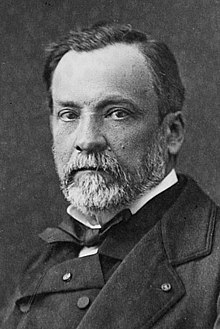
Louis Pasteur


Louis Pasteur was a world renowned French chemist and biologist. He was born on December 27 1822 in the town of Dole in Eastern France.
In 1847 Pasteur was awarded his doctorate and then took up a post as assistant to one of his teachers. He spent several years teaching and carrying out research at Dijon and Strasbourg and in 1854 moved to the University of Lille where he became professor of chemistry. Here he continued the work on fermentation he had already started at Strasbourg. By 1857 Pasteur had become world famous and took up a post at the Ecole Normale Superieure in Paris. In 1863 he became dean of the new science faculty at Lille University. While there, he started evening classes for workers. In 1867 a laboratory was established for his discovery of the rabies vaccine, using public funds. It became known as the Pasteur Institute and was headed by Pasteur until his death in 1895.
Pasteur founded the science of microbiology and proved that most infectious diseases are caused by micro-organisms. This became known as the "germ theory" of disease. He was the inventor of the process of pasteurisation and also developed vaccines for several diseases including rabies. The discovery of the vaccine for rabies led to the founding of the Pasteur Institute in Paris in 1888.

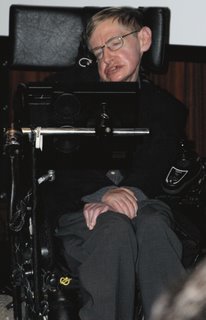
Stephen Hawking


Stephen William Hawking (born 8 January 1942) is a British theoretical physicist and author. His significant scientific works to date have been collaboration with Roger Penrose on theorems on gravitational singularities in the framework of general relativity, and the theoretical prediction that black holes should emit radiation, often called Hawking radiation.
He is an Honorary Fellow of the Royal Society of Arts, a lifetime member of the Pontifical Academy of Sciences, and a recipient of the Presidential Medal of Freedom, the highest civilian award in the United States. Hawking was the Lucasian Professor of Mathematics at the University of Cambridge between 1979 and 2009. Subsequently, he became research director at the university's Centre for Theoretical Cosmology.
Hawking has achieved success with works of popular science in which he discusses his own theories and cosmology in general; his A Brief History of Time stayed on the British Sunday Times best-sellers list for a record-breaking 237 weeks. Hawking has a motor neurone disease related to amyotrophic lateral sclerosis, a condition that has progressed over the years. He is now almost entirely paralysed and communicates through a speech generating device.

Werner Arber

Werner ArberSwiss microbiologist Werner Arber was awarded the Nobel Prize for Medicine or Physiology in 1978, sharing the $165,000 award with Daniel Nathans and Hamilton O. Smith. Observing that when a virus entered bacterium, most of the viral deoxyribonucleic acid (DNA) was destroyed, Arber theorized that the bacterium produced an enzyme that severed the viral DNA into smaller pieces. Nathans and Smith later proved that Arber was correct -- that certain enzymes, called 'restriction enzyme' or 'restriction endonuclease', cleave long strands of DNA into tiny fragments. These fragments, which retain their genetic information, led to the development of gene splicing -- techniques for separating, manipulating, and eventually altering this basic genetic material.
After winning his Nobel honors, Arber became an outspoken participant in the establishment of guidelines to conduct recombinant DNA research safely and ethically. His daughter, Silvia Arber, is a professor of neurobiology at the University of Basel, studying neuronal circuit formation in the developing spinal cord.

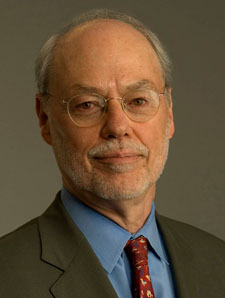
Phillip A. Sharp

Phillip_SharpPhillip Allen Sharp is an American geneticist and molecular biologist. He was awarded the Nobel Prize in Physiology or Medicine 1993 for his discovery of RNA splicing, the technique of modifying the RNA. He shared the prize with Richard J. Roberts. Sharp discovered that genes in eukaryotes are not contiguous strings but they contain introns. The messenger RNA can be spliced to delete these introns and different proteins can be obtained from the same sequence of DNA.
Phillip Sharp is also an accomplished businessman and is the co-founder of 3 successful companies Biogen, Alnylam Pharmaceuticals and Magen Biosciences. Sharp was awarded the Dickson Prize 1980, Lasker Award 1988, Benjamin Franklin Medal by the American Philosophical Society 1999 and the National Medal of Science 2004.

Frederick Sanger


Frederick SangerFrederick Sanger is an English Biochemist and two time Nobel Laureate in Chemistry. He was awarded the Nobel Prize in Chemistry 1958 for his work on the structure of proteins (especially insulin) and in 1980 he shared the Nobel Prize in Chemistry with Walter Gilbert and Paul Berg. Gilbert and Sanger shared half of the prize for their breakthrough in the determination of nucleic acid base sequence.
Frederick Sanger proved that proteins have a defined chemical composition. He successfully determined the complete amino acid sequence of two polypeptide chains of Bovine Insulin. Sanger developed “dideoxy “chain termination method for sequencing DNA molecule. This method was used to sequence human mitochondrial DNA, bacteriophage DNA and eventually entire human genome.
 
© Copyright 2010-2011 A All Rights Reserved.
Template Design by Ram Chandra Choudhary | Published by | Powered by Blogger.com.