Welcome

A WORLD OF SCIENTESTS & THEIR INVENTIONS
ENTER

Add An Entry Or A Welcome Page To Blogger by Beautiful Blogger Widgets

A WORLD OF SCIENTISTS AND THEIR INVENTIONS

Welcome

On this blog you'll access to important information related to scientists and their contribution in the field of Biological science as well as other fields of Science. I hope this blog helpful for every person who looking for study or research in Science.
Thanks for visit my blog
Saturday, 29 September 2012

Antony van Leeuwenhoek


Anton van Leeuwenhoek was a linen merchant in Delft, the Netherlands, whose passion for science helped make him one of the most important figures in the history of microbiology.
Van Leeuwenhoek saw his first microscope, in use in the fabric trade, in 1653, and he soon bought one of his own. He read Robert Hooke's Micrographia, and it reportedly enthralled him.
By 1668, he was grinding lenses for his own simple microscopes and looking at every tiny thing he could find. Those two things — his boundless curiosity and the fact that he kept improving his lenses were critical to his discoveries.
Van Leeuwenhoek was the first to identify microorganisms, notably protists and bacteria, and the first to describe red blood cells and sperm.
Van Leeuwenhoek's discoveries were documented in letters he wrote to Henry Oldenburg, secretary of the Royal Society of London, between 1673 and Van Leeuwenhoek's death in 1723. The letters made him famous, and the Royal Society made him a fellow in 1680.

Edward Jenner


Edward Jenner.Edward Jenner was born in 1749, in Berkeley. He wanted to get rid of small pox for ever so he carried out a simple experiment, which turned out to change everyone's lives for the better.
Edward Jenner noticed that cows sometimes got a disease called cowpox. Because the milkmaids had to milk the cows, they often also caught cowpox…but it didn't seem to harm them. Edward Jenner was intrigued - milkmaids that had caught cowpox never seemed to catch the contagious and deadly smallpox, which thousands of people died from. Edward Jenner came up with a theory, that cowpox prevented people from getting smallpox. To test his theory, Edward Jenner needed to find someone who was young and who hadn't caught smallpox or cowpox before. He found a boy called James Phipps (aged 8) and explained his idea. Edward Jenner then took some pus from a milkmaid's cowpox and rubbed it into two small incisions on James's arm. Soon after, James became ill with cowpox but the symptoms didn't last long. 6 weeks later, Jenner took some pus from a smallpox victim and again put it into James's cuts. However, this time James didn't catch the disease. Cowpox was called vaccinia so he called his invention the vaccine.

Craig Venter

John Craig Venter (born October 14, 1946) is an American biologist and entrepreneur. He is known for being one of the first to sequence the human genome and for creating the first cell with a synthetic genome. Venter founded Celera Genomics, The Institute for Genomic Research (TIGR) and the J. Craig Venter Institute (JCVI), and is now working at JCVI to create synthetic biological organisms. In  1984, he moved to the National Institutes of Health campus where he  developed Expressed Sequence Tags or ESTs, a revolutionary new strategy  for rapid gene discovery. Using ESTs he and his team discovered thousands  of new human genes while at NIH. In 1992 Dr. Venter founded The Institute  for Genomic Research (TIGR), a not-for-profit research institute, where in  1995 he and his team decoded the genome of the first free-living organism,  the bacterium Haemophilus influenzae, using his new whole genome shotgun  technique. This led to the rapid  and accurate decoding of hundreds of  important genomes including human viral and bacterial pathogens,  environmental microbes, insect, plant and mammalian genomes.  In 1998, Dr. Venter founded Celera Genomics to sequence the human  genome using new tools and  techniques he and his  team developed. This  research culminated with the February 2001 publication of the human genome  in the journal,  Science. He and his team at Celera also sequenced the fruit  fly, mouse and rat genomes.

Kary Mullis


Kary Banks Mullis, Nobel Prize winning chemist, was born on December 28, 1944, in Lenoir, North Carolina.
He received a Bachelor of Science degree in chemistry from the Georgia Institute of Technology in 1966. He earned a Ph.D. degree in biochemistry from the University of California, Berkeley, in 1972 and lectured in biochemistry there until 1973. That year, Kary became a postdoctoral fellow in pediatric cardiology at the University of Kansas Medical School, with emphasis in the areas of angiotensin and pulmonary vascular physiology. In 1977 he began two years of postdoctoral work in pharmaceutical chemistry at the University of California, San Francisco.
Kary joined the Cetus Corporation in Emeryville, California, as a DNA chemist in 1979. During his seven years there, he conducted research on oligonucleotide synthesis and invented the polymerase chain reaction.
Kary received a Nobel Prize in chemistry in 1993, for his invention of the polymerase chain reaction (PCR). The process, which Kary conceptualized in 1983, is hailed as one of the monumental scientific techniques of the twentieth century.
A method of amplifying DNA, PCR multiplies a single, microscopic strand of the genetic material billions of times within hours. The process has multiple applications in medicine, genetics, biotechnology, and forensics. PCR, because of its ability to extract DNA from fossils, is in reality the basis of a new scientific discipline, paleobiology.
Kary has authored several major patents. His patented inventions include the PCR technology and UV-sensitive plastic that changes color in response to light. His most recent patent application covers a revolutionary approach to instantly mobilize the immune system to neutralize invading pathogens and toxins, leading to the formation of his latest venture, Altermune LLC. Altermune is currently focusing on Influenza A and drug resistant Staphylococcus aureus.

Arthur Kornberg

Arthur KornbergArthur Kornberg (March 3, 1918 – October 26, 2007) was an American biochemist who won the Nobel Prize in Physiology or Medicine 1959 for his discovery of "the mechanisms in the biological synthesis of deoxyribonucleic acid (DNA)" together with Dr. Severo Ochoa of New York University. In 1953, he became Professor and Head of the Department of Microbiology, Washington University, St. Louis, Missouri, until 1959. There he continued experimenting with the enzymes that created DNA. In 1958, Kornberg isolated the first DNA polymerising enzyme, now known as DNA polymerase I.
His primary research interests were in biochemistry, especially enzyme chemistry, deoxyribonucleic acid synthesis (DNA replication) and studying the nucleic acids which control heredity in animals, plants, bacteria and viruses.

Har Gobind Khorana

H. Gobind KhoranaDr. Hargobind Khorana was born on 9th January 1922 at Raipur, Punjab (now in Pakistan). Dr.Khorana was responsible for producing the first man-made gene in his laboratory in the early seventies. This historic invention won him the Nobel Prize for Medicine in 1968 sharing it with M.W. Nuremberg and R.W. Holley for interpreting the genetic code and analyzing its function in protein synthesis.
They all independently made contributions to the understanding of the genetic code and how it works in the cell. Khorana, born into a poor family attended D.A.V. High School in Multan, took his M.Sc from Punjab University at Lahore and in 1945 he went to England on a government scholarship and obtained a PhD from the University of Liverpool (1948). Dr. Khorana spent a year in Zurich in 1948-49 as a post-doctoral fellow at the Swiss Federal Institute of Technology and returned to India for a brief period in 1949. He returned to England in 1950 and spent two years on a fellowship at Cambridge and began research on nucleic acids under Sir Alexander Todd and Kenner. His interest in proteins and nucleic acids took root at that time. In 1952 he went to the University of British Columbia, Vancouver on a job offer and there a group began to work in the field of biologically interesting phosphate esters and nucleic acids with the inspiration from Dr. Gordon M. Shrum and Scientific counsel from Dr. Jack Campbell. In 1960 he joined the University of Wisconsin as Professor and co-Director of the Institute of Enzyme Research and Professor of Biochemistry (1962-70) and became an US citizen. Khorana continued research on nucleic acid synthesis and prepared the first artificial copy of a yeast gene. Dr. Khorana is also the first to synthesize oligonucleotides, that is, strings of nucleotides. These custom designed pieces of artificial genes are widely used in biology labs for sequencing, cloning and engineering new plants and animals. The oligo nucleotides, thus, have become indispensable tools in biotechnology.
Friday, 28 September 2012

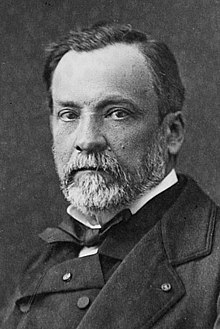
Louis Pasteur


Louis Pasteur was a world renowned French chemist and biologist. He was born on December 27 1822 in the town of Dole in Eastern France.
In 1847 Pasteur was awarded his doctorate and then took up a post as assistant to one of his teachers. He spent several years teaching and carrying out research at Dijon and Strasbourg and in 1854 moved to the University of Lille where he became professor of chemistry. Here he continued the work on fermentation he had already started at Strasbourg. By 1857 Pasteur had become world famous and took up a post at the Ecole Normale Superieure in Paris. In 1863 he became dean of the new science faculty at Lille University. While there, he started evening classes for workers. In 1867 a laboratory was established for his discovery of the rabies vaccine, using public funds. It became known as the Pasteur Institute and was headed by Pasteur until his death in 1895.
Pasteur founded the science of microbiology and proved that most infectious diseases are caused by micro-organisms. This became known as the "germ theory" of disease. He was the inventor of the process of pasteurisation and also developed vaccines for several diseases including rabies. The discovery of the vaccine for rabies led to the founding of the Pasteur Institute in Paris in 1888.

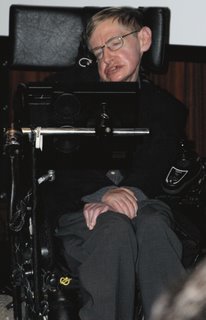
Stephen Hawking


Stephen William Hawking (born 8 January 1942) is a British theoretical physicist and author. His significant scientific works to date have been collaboration with Roger Penrose on theorems on gravitational singularities in the framework of general relativity, and the theoretical prediction that black holes should emit radiation, often called Hawking radiation.
He is an Honorary Fellow of the Royal Society of Arts, a lifetime member of the Pontifical Academy of Sciences, and a recipient of the Presidential Medal of Freedom, the highest civilian award in the United States. Hawking was the Lucasian Professor of Mathematics at the University of Cambridge between 1979 and 2009. Subsequently, he became research director at the university's Centre for Theoretical Cosmology.
Hawking has achieved success with works of popular science in which he discusses his own theories and cosmology in general; his A Brief History of Time stayed on the British Sunday Times best-sellers list for a record-breaking 237 weeks. Hawking has a motor neurone disease related to amyotrophic lateral sclerosis, a condition that has progressed over the years. He is now almost entirely paralysed and communicates through a speech generating device.
 
© Copyright 2010-2011 A All Rights Reserved.
Template Design by Ram Chandra Choudhary | Published by | Powered by Blogger.com.